

Dealing with debt is like carrying a heavy backpack that just gets heavier. Every step feels harder, and putting it down seems impossible. You’re not alone if you feel this way—many people face the challenge of avoiding or getting out of debt.
A surprising fact? An emergency fund can be your secret weapon against falling into debt.
This article guides you on how to stay clear of the debt trap. We’ll talk about saving for rainy days, making smart budget plans, and using credit cards wisely. Ready to lighten your load? Keep reading the strategies to avoid falling into debt.
How to Understand Your Debt
Debt happens when you borrow money and have to pay it back later, usually with an extra charge called interest. Think of it like this: if you use a credit card or take out a loan for college or a car, you’re in debt because you’ve got to give back more than what you borrowed.
Americans had huge debts in 2016 – $979 billion on credit cards alone, making about $8,377 per household. That’s not counting student loans at $1.34 trillion or car loans at $1.2 trillion.
Understanding your debt is key to managing your finances wisely. For example, knowing the difference between good debt (like student loans that can lead to higher earning potential) and bad debt (like high-interest credit card spending) helps make better borrowing decisions.
With so much money owed across mortgages, auto loans, and credit cards, keeping track of what you owe is crucial to avoid sinking deeper into the hole of financial stress.
Essential Strategies to Avoid Falling into Debt
Mastering your finances is crucial if you’re aiming to dodge the debt trap. Let’s dive into some key moves that can set you on a path free from financial worries.
Building an Emergency Fund
Building an emergency fund is key to staying out of debt. Less than half of American consumers have a three-month buffer, but experts recommend saving up to six months’ worth of expenses.
This pot of money acts as a safety net if unexpected costs pop up—like car repairs or medical bills. Start small and regularly set aside money. Even a little bit each month adds up.
Having this fund means you won’t have to use credit cards for emergencies, keeping interest rates and potential debt at bay. Choose a high-interest savings account for your fund to grow faster.
Watch your peace of mind increase as your emergency stash does. It’s the foundation for strong personal finance health and prevents borrowing that can lead to spiraling debt traps and impact your credit score negatively.
Creating and Sticking to a Budget
A budget acts like a roadmap for your finances. It guides you on how much to spend and save each month. First, list all your income sources, including paychecks and any other earnings.
Then, track every expense—groceries, rent, utilities, and fun activities too. This helps see where your money goes.
Sticking to this plan is crucial. Review it regularly and adjust as needed. Unexpected expenses pop up. Maybe you’ve got car repairs or a medical bill that wasn’t planned for—an emergency fund helps here but stay true to the budget for everyday spending.
This discipline keeps debt at bay and ensures financial stability over time.
Developing a Habit of Saving
Developing a habit of saving takes more than just deciding to do it. It’s about creating small, manageable habits that grow over time. Start by setting up automatic transfers from your checking account to your savings account.
This simple step ensures you’re consistently putting money aside for the future without having to think about it each month.
Building an emergency fund is crucial. Life throws unexpected expenses our way—car repairs, medical bills, or sudden job loss can hit at any moment. Having money set aside in an emergency fund acts as a financial safety net, helping you avoid falling into debt when surprises arise.
Aim to save enough to cover three to six months of living expenses; it’s ambitious but achievable with persistence and discipline.
Keeping Track of Bills
Keeping track of bills ensures you don’t face late fees or damage your credit history. To start, make a list of all monthly expenses—rent, utilities, credit card payments, and any loans like personal loans or home mortgages.
Use a calendar to mark due dates for each bill. This helps in avoiding missed payments, which can lead to negative marks on your credit report.
Setting up automatic payments through banking services can also simplify managing bills. It ensures that essentials such as the utility bills and credit card debt are paid on time every month without fail.
For expenses that vary, like utility bills, check statements monthly to adjust your budget accordingly. This proactive approach not only maintains a good credit score but also keeps stress at bay by knowing everything is under control.
Paying Full Credit Card Bill Every Month
Paying your entire credit card bill each month is crucial to steer clear of debt. This approach helps you avoid late fees and the high interest that can quickly add up, making it harder to manage your finances.
It’s a smart move for maintaining a healthy credit score too. A good score opens doors to better financial products and more favorable terms on loans or lines of credit.
Make it a habit, and soon you’ll find yourself in a much stronger position financially. Not only does this practice keep your debt levels down, but it also puts you in control of your spending habits.
You’ll be less tempted to buy what you can’t afford if you know the full amount that needs to be paid at month’s end. Plus, staying out of debt means more money saved for things that truly matter—like building an emergency fund or investing in your future.
Credit Card Using Strategies to Avoid Falling into Debt
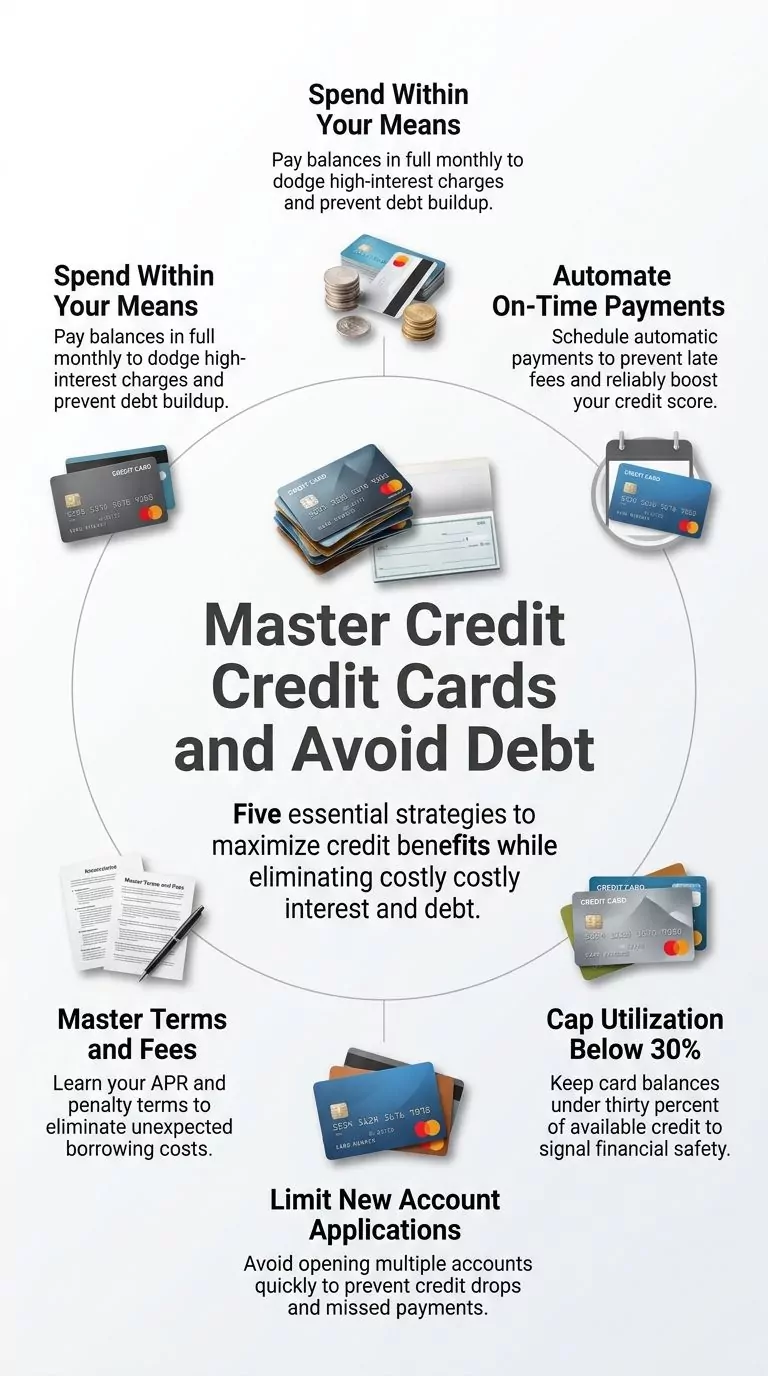
Handling credit cards smartly can keep you out of trouble. Learn how the right moves ensure you enjoy shopping without drowning in debt.
Spend within Your Means
Spending within your means is a cornerstone of avoiding debt. It requires knowing how much money you bring in and ensuring that what goes out never exceeds this amount. Building an emergency fund plays a critical role here—it shields you from unforeseen expenses without the need to borrow.
This strategy keeps your bank account balanced and your stress levels low.
Paying off credit card bills in full each month also ties directly into living within your means. By clearing the balance, you dodge high-interest charges and gradually build a good credit score—a win-win situation for anyone looking to maintain financial health and freedom.
Borrowing only what’s necessary minimizes debt risks, laying the groundwork for a secure financial future without compromising on immediate needs or long-term goals.
Regular and Timely Monthly Payments
Paying your credit card bill on time every month is a key step in staying out of debt. This practice helps you avoid extra charges and high interest fees that can quickly add up. Making those payments before the due date not only keeps your account in good standing but also supports building a positive credit score.
Keeping track of due dates ensures you never miss a payment, which is crucial for managing your finances wisely. Setting up automatic payments can be a helpful strategy to make sure you’re always on time.
Remember, regular and timely monthly payments are essential for using credit cards responsibly and avoiding unnecessary debt.
Maintaining a Low Utilization Ratio
Keep your credit card balance low. This means not using all the money your credit card company says you can. It’s like having a full plate but only eating enough to be satisfied, not stuffed.
A low balance shows lenders you’re good at managing money and don’t rely too much on borrowing. Try to use less than 30% of your credit limit. If your limit is $1,000, spend no more than $300.
Using smaller amounts of your available credit helps improve your credit score. High scores make getting loans easier and cheaper in the future because they tell lenders you’re a safe bet for paying back what you owe.
Check how much you’ve spent each month and keep it under that 30% mark. This simple habit can save you from debt troubles and build a stronger financial foundation.
Understanding Credit Card Terms
Credit card terms can seem like a foreign language at first. But getting to know them is crucial for managing your finances wisely. The interest rate or APR affects how much you pay back on what you borrow.
Paying off credit card balances in full every month helps you avoid extra charges. This practice also boosts your credit score, making future borrowing less costly.
Knowing the details of any fees, such as late payment or over-the-limit fees, lets you dodge unnecessary expenses. A good grasp of these terms supports maintaining a low utilization ratio—how much of your available credit you’re using—which creditors closely watch.
In essence, understanding these elements prevents debt from sneaking up on you and keeps your financial health in top shape.
Avoid Opening Multiple Accounts Within a Short Time
Opening multiple accounts in a short period can lead you into debt troubles, especially if these are credit card companies’ offerings. It might seem tempting to grab those sign-up bonuses or the promise of more spending power, but it’s a risky move.
Each new account can impact your financial health. Banks and lenders see this as risky behavior, hinting that you might not be good at managing your finances.
Having many accounts means keeping track of several bills, due dates, and possibly dealing with different interest rates. This complexity increases the chance of missing payments or overspending across accounts.
Wise use of credit involves understanding these risks clearly and avoiding them by limiting how often you apply for new accounts. Remember that smart money management is about quality over quantity when it comes to credit tools at your disposal.
How to Manage Your Existing Debt
Managing existing debt might seem daunting, but it’s possible with the right approach. Here are ways to tackle what you owe and get back on a path toward financial health.
Only Borrowing What You Need
Borrowing only what you need is a key step in managing your debts efficiently. It’s tempting to take out larger amounts when offered, but this can lead to trouble down the road. Before signing for that loan or swiping your credit card, ask yourself if the expense is truly necessary.
Financial experts suggest keeping mortgage payments under 35% of your income. This ensures you have enough left for savings and other essentials.
For big purchases like vehicles, assess whether the investment matches your needs without straining your budget. Not every deal that seems good is right for you. Sticking to what you can comfortably repay avoids excessive payments and keeps debt at bay.
Remember, smart borrowing reflects well on your credit score and opens up more opportunities for financial growth without the burden of unnecessary debt.
Maintaining a Good Credit Score
Keeping a good credit score opens doors to lower interest rates, making loans and credit cards more affordable. This means to develop better money habit on monthly payments. To achieve this, it’s crucial to pay bills on time every single month.
Late payments can hurt your score, making future financial moves harder.
Staying below a 43% debt-to-income ratio also matters, especially when you’re eyeing that new car or dream home. It shows lenders you’re not drowning in debt and can manage new loans responsibly.
Regularly checking your credit report for errors helps too—catching mistakes early prevents them from dragging down your score.
Cautious Use of Buy Now, Pay Later Plans
Buy Now, Pay Later plans seem tempting. They let you get what you want now without paying all at once. But, be careful—these plans can quickly lead to debt if not managed well. Always check if you really need the item and if you can afford it over time.
These plans often cause people to spend more than they have. This mismatch between spending and income leads to excessive payments that are hard to cover later on. To stay safe, use these options sparingly and always plan your payments in advance to ensure they fit into your budget without stressing your finances further.
Final Words
Avoiding debt—it sounds daunting, right? Yet, it boils down to a few practical steps. First off, build that emergency fund; you never know when life throws a curveball. Next up, make and stick to your budget like glue—overspending is a no-go zone.
And keep an eagle eye on those bills; late fees are sneaky! The biggest game-changer? Pay off credit card bills in full each month. That’s the way to steer clear of the debt trap, keeping your finances healthy and your mind at ease.