
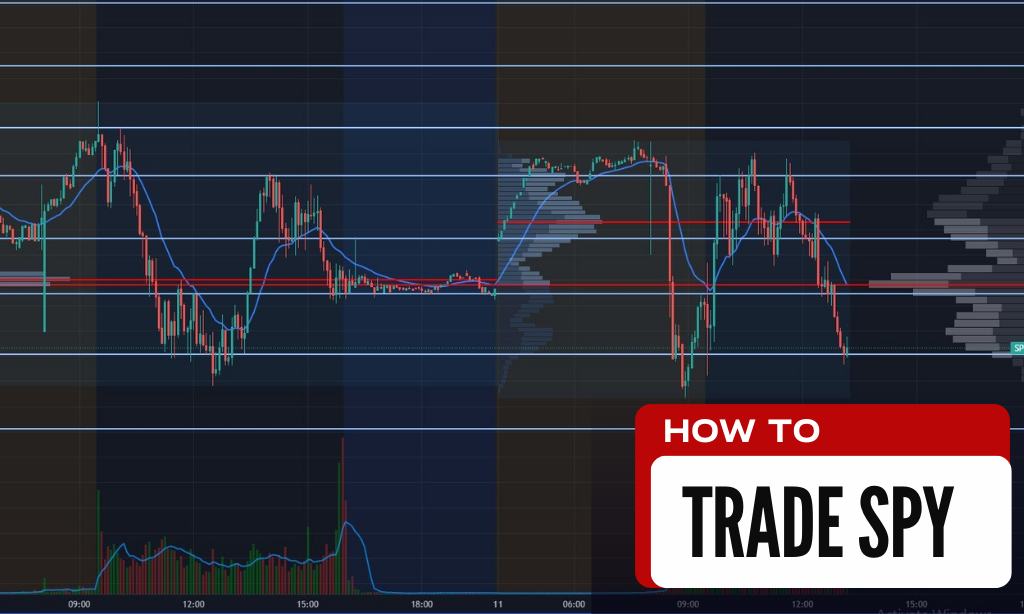
Diving into the world of stock trading can be overwhelming, especially when dealing with popular instruments like SPY. This exchange-traded fund reflects the S&P 500, offering a pulse on the broader U.S. market.
Our guide lays out simple steps to help you start trading SPY options confidently and wisely. Read on for tools and strategies that open doors to informed investing decisions—let’s begin and learn how to trade SPY!
Understanding SPY
SPY tracks the S&P 500 Index, a collection of 500 large US companies. It’s like holding a piece of America’s biggest businesses in one investment. Think of it as a basket filled with shares from tech giants to healthcare leaders.
Traders love SPY because it updates prices all day, unlike mutual funds which only change after markets close.
Buying and selling SPY shares is easy due to its popularity and high demand. This means you can quickly enter or exit trades with minimal price difference between buy and sell orders.
SPY shows how the whole stock market is doing in just one glance, which helps traders make fast decisions based on broad market moves.
Pros and Cons of Trading SPY
Trading SPY, the ETF tracking the S&P 500 index, offers unique opportunities and drawbacks for investors and traders alike. Below, we delve into the key advantages and disadvantages that come with trading SPY options.
| Pros of Trading SPY | Cons of Trading SPY |
|---|---|
| High liquidity translates to tighter bid-ask spreads and efficient executions. | Potential loss of investment is a reality, particularly for inexperienced traders. |
| SPY options allow traders to gain exposure to the diverse range of stocks within the S&P 500. | Market volatility can lead to significant losses, especially with leveraged products like options. |
| Day trading is possible, which is ideal for those unable to commit to long-term positions. | Options trading demands constant monitoring due to price sensitivity to market fluctuations. |
| They offer flexibility in strategies, from conservative to highly aggressive. | Trading options requires a comprehensive understanding of complex strategies. |
The balance between the inherent risks and the potential rewards will determine the suitability of SPY options trading for individuals. It is essential to consider these factors carefully before diving into the world of SPY options.
Basics of SPY Options
SPY options are contracts that give you the right to buy or sell shares of the SPDR S&P 500 ETF at a set price before a certain date. These options let you bet on the future of top US companies without buying their stocks directly.
Think of them as tickets; some allow you to purchase shares at today’s prices, known as calls, while others permit selling at these prices, called puts. You get different choices like ‘at the money’, where strike and market prices match, ‘in the money’ for profitable trades, and ‘out of the money’ if they’re not valuable yet.
You need access to trade these options on a financial platform with permission. This means having an account that meets specific requirements for options trading – usually Level 2 or higher.
Once set up, traders can pick from many expiration dates for SPY options since they expire multiple times per week every Monday, Wednesday, and Friday as long as markets are open.
Watch out for high liquidity too because it makes trading smoother by letting you quickly buy and sell without big price changes. Additionally, you can also read Google Bard’s Top Stock Picks.
How to Trade SPY: Technical Analysis for SPY Options
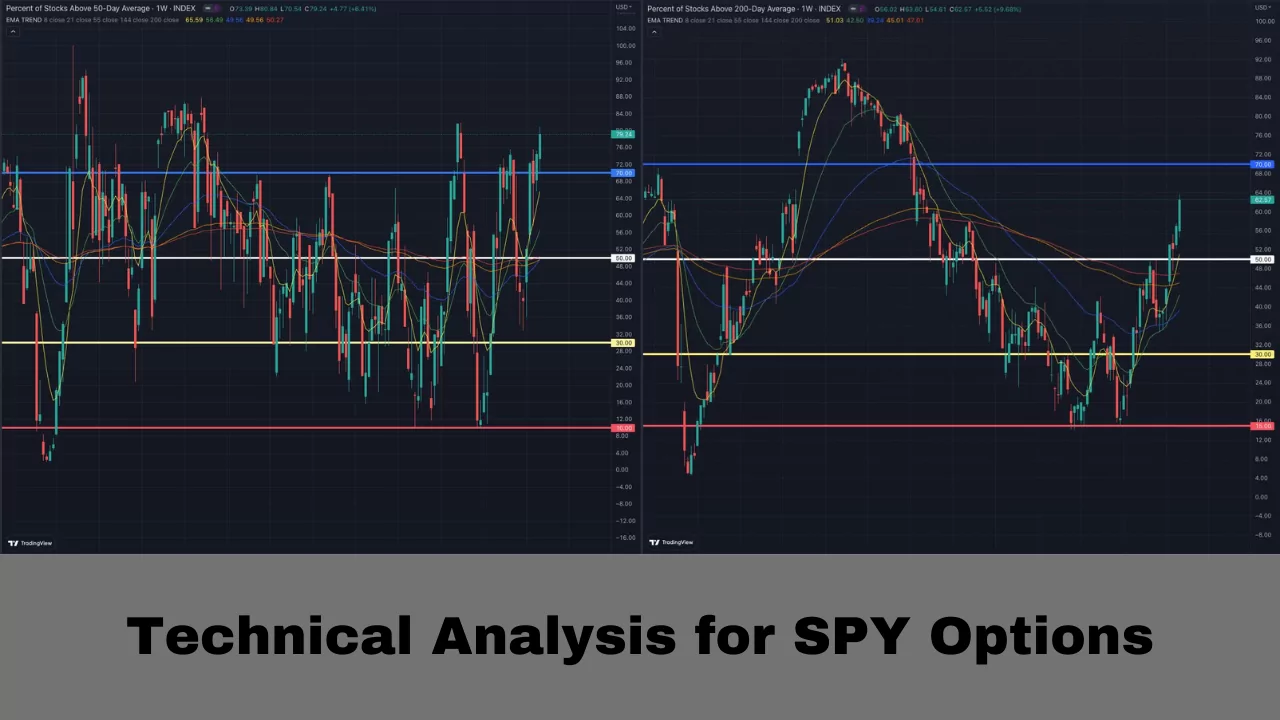
In this section we’ll talk about how to trade SPY.
Technical analysis helps traders spot trends and patterns in SPY options. They use charts to track price action and predict future movements. Tools like moving averages smooth out daily price fluctuations, giving a clearer view of the trend direction.
The Relative Strength Index (RSI) measures if SPY is overbought or oversold useful for finding entry and exit points.
Volume indicators are also key they show how many contracts trade hands and can signal strong moves when combined with large price changes. Traders look at past prices, but they know history doesn’t always repeat itself exactly.
Each tool adds a piece to the puzzle, helping them make informed decisions on where the market might head next.
If you’re interested then you can check about JMK Innovations.
Five Key SPY Options Trading Strategies
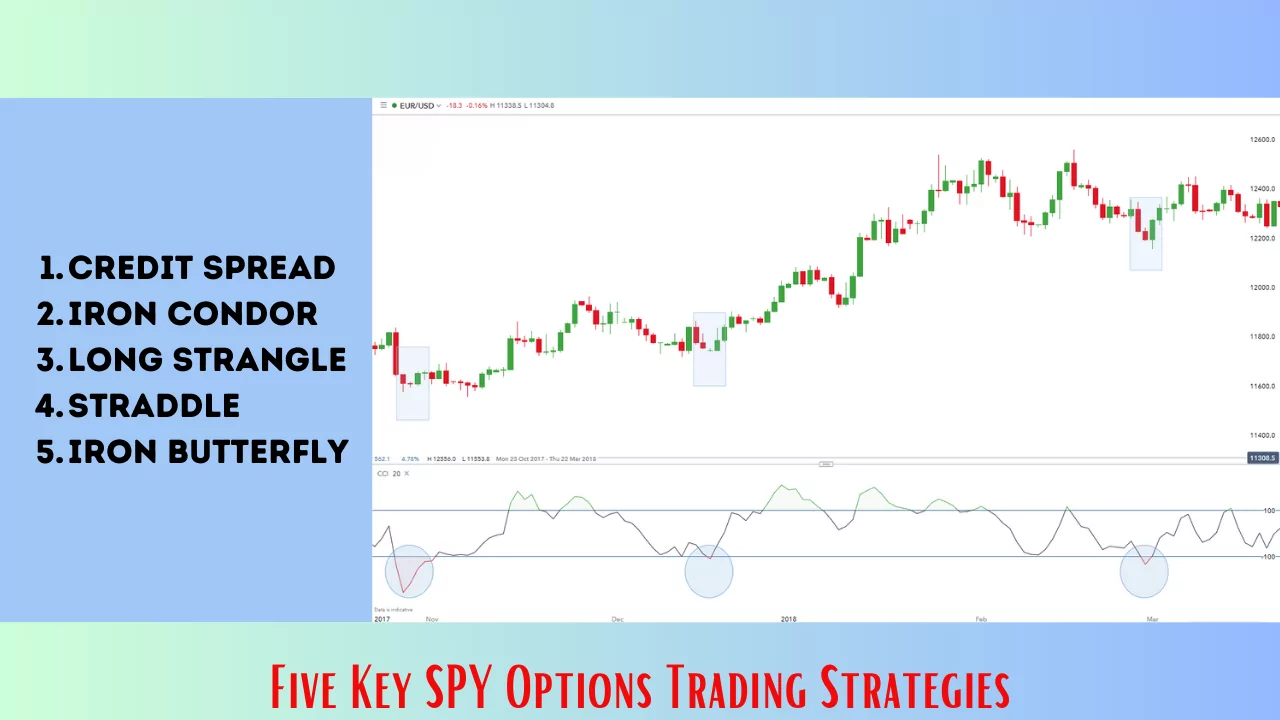
Besides learning how to trade SPY, you should also learn about the key SPY options. Mastering SPY options trading strategies can open doors to diversified investment opportunities and potentially lucrative returns. From the income-generating tactics of Credit Spreads and Iron Condors to the more nuanced approaches of Long Strangles, Straddles, and Iron Butterflies each strategy offers a unique way to navigate market movements and leverage volatility to your advantage.
Credit Spread
Credit spreads involve buying and selling options contracts with different strike prices but the same expiration date. Traders use this strategy to make a profit from the difference in option premiums.
It’s a popular approach for those looking to earn income while managing risk. You might opt for a credit spread when you have a mild opinion on market direction.
Let’s say SPY is trading sideways or you expect it to stay within a specific range; that’s when credit spreads can shine. By selling an option at one price and buying another option at a lower price, you pocket the premium if SPY stays put.
If things go as planned, both options expire worthless, and you keep your earned premium minus transaction costs! Remember, always factor in risk management techniques like stop loss to protect your trades from unexpected moves in SPY prices.
Iron Condor
An iron condor is a trading strategy that options traders use to capture profits when they expect little movement in the market. This setup combines both call and put credit spreads, setting them at different strike prices but with the same expiration date.
The magic happens when the SPY price stays between these strike prices. Traders watch closely as maximum profit comes when SPY moves sideways within a tight range.
To succeed with an iron condor, you need to understand implied volatility and time value decay key components of options pricing. As time ticks down to options expiration, traders keep their eyes glued to delta and theta the Greeks that help measure risk and timing in this trade.
They aim for capital gains without needing SPY to make big swings; instead, they profit from stability in the ETF’s price.
Long Strangle
A Long Strangle is a strategy for the bold trader who expects big moves in SPY prices. You buy both calls and put options at different strike prices but with the same expiration date.
It’s exciting because you can win whether SPY jumps high or drops low, as long as it swings hard! Think of it like casting a wide net in choppy waters, hoping to catch a massive wave.
This play shines when markets are buzzing with rumors that could push stocks up or down fast earnings reports, economic news, or industry shakeups. Your risk? Just the money spent on those options.
But get your predictions right, and there’s serious profit potential. Still, remember to backtest strategies and brush up on option pricing before diving in to ensure you’re making informed trades on those active SPY markets.
Straddle
Straddle breaks the mold of traditional options trading with its unique approach to market movements. Picture this: You expect SPY’s price to swing wildly but don’t know which way it will go.
Here’s where Straddle steps in. By buying both a call and put option at the same strike price, you set yourself up for gains regardless of whether SPY shoots up or tumbles down.
Understanding the Greeks Delta, Theta, and Vega is key to mastering this strategy. These are more than just letters from an ancient alphabet; they’re your roadmap to how option prices react to time, volatility, and price changes.
Your goal? Timing and precision. Get these right with a straddle play, and you could see significant returns as SPY makes its move.
Iron Butterfly
Iron Butterfly is a smart options trading strategy for when you expect a stock to stay in a tight price range. You sell both a call and put at the same strike price, which creates the “body” of the butterfly.
Then, you buy one lower-strike put and one higher-strike call to form the wings. This move caps your losses if things go wrong.
You pocket the most cash when prices hover around your chosen strikes until expiration. But there’s always risk involved even with safety nets like buying calls and puts can’t wipe away all dangers.
Your potential loss stays locked between what you paid for those “wings” and how much cash you got at first from selling that straddle it’s as simple as basic math!
Five Important Factors in SPY Options Trading
As you delve into the world of SPY options trading, certain dynamics play pivotal roles in shaping your experience and potential success. Grasping these critical factors including how market hours affect trade execution, the impact of costs on profitability, the nuances of option expiration timing, liquidity considerations for smoother transactions, and taxation implications can set a strong foundation for strategic trading decisions.
Trading Hours
SPY options have a set schedule. They mainly trade from 9:30 AM to 4:00 PM Eastern time. This matches the regular trading hours for U.S. stock markets.
Understanding ES (Futures) can also be helpful for SPY traders. The ES price action before and after regular trading hours might affect SPY prices once the market opens. Keep an eye on ES if you want extra insight into potential SPY movements.
Trading Costs
Trading costs can add up when you trade SPY options. Each broker sets their fees, which means every trade you make might cost a different amount. You need to pay attention to these charges because they affect your profits.
Some brokers charge a flat rate per trade, while others may charge based on the number of contracts bought or sold.
Keep an eye out for extra fees like margin interest or platform usage charges that could sneak up on you. Also, compare fee structures before choosing a broker so you can keep more money in your pocket.
High trading volume can sometimes lower costs with discounts from brokers eager for your business. Remember, cheaper isn’t always better; consider both price and quality of service when picking a place to trade SPY options.
Options Expiration
Options expiration plays a crucial role in SPY options trading. Options have set dates when they expire, and this is when the choice to buy or sell SPY shares must be made. If you hold an option past its expiration date, it becomes worthless.
That means timing is key! You need to act before the option expires if you want to use it.
SPY options follow standard expiration dates, which are typically the third Friday of each month. On these days, market activity can spike as traders settle their positions. Make sure you mark those dates on your calendar because they’re important for planning your trades.
Understanding how expiration affects options’ time value will help you make smarter choices and avoid losing money on expired contracts.
Liquidity
Liquidity is key in the options market. For SPY options, it means you can buy and sell quickly without moving the price too much. This happens because lots of traders are always ready to trade SPY options.
With $370 billion in assets under management, they are super liquid.
High liquidity brings more flexibility for you as a trader. You’ll find it easier to enter and exit trades with good prices. Market makers keep order flow smooth, so your trades happen fast.
Always check the delta, volume, and open interest to pick the best call options on SPY for your strategy.
Taxation
Money earned from trading SPY options counts as income. The IRS sees this income as short-term capital gains. That means you pay the same tax rates as for regular salary or wages. These rates are higher than long-term capital gains taxes.
Keep track of all your trades and money made or lost. You’ll need this info when it’s time to do taxes. Also, set aside some money for taxes on any profits you might make trading SPY options.
This way, you won’t be surprised by a big tax bill later on. Remember, smart traders plan for tax time!
Advantages and Risks of Trading SPY Options
SPY options can be great for traders who want to make money from the stock market’s ups and downs. You can buy or sell these options quickly because many people trade them. They match well with how the whole stock market is doing, which means your chances of earning can rise as stocks do well.
Options also offer different times you can choose to end your trade, giving you control over when you might make a profit.
Trading SPY options isn’t without danger though. If the stock price doesn’t change like you thought it would, your option could become worthless and you’d lose what you paid for it.
Some ways of trading limit how much money you could make if things go right. To even start trading SPY options, you need permission to use a certain type of trading account that lets you take on more complex trades.
And remember, prices in the market often jump around a lot during certain times, especially at the very beginning and end of the trading day.
Read Also: How to Change From Sole Proprietor to LLC
Getting Started with SPY Options
Embarking on your SPY options trading journey begins with selecting the right brokerage a crucial step that sets you up for success and opens a new chapter in your financial story.
Choosing a Brokerage
You’ll need a good brokerage to trade SPY options. Look for one that offers Level 2 or higher options trading accounts. Interactive Brokers is a strong choice because they provide access to the tools you’ll want.
Compare fees, reputation, and customer support before you decide. Make sure their platform is easy to use and has helpful features.
Your broker should teach you about option trading too. They often have educational resources like e-learning courses or a trading room where experts share their knowledge. This can help you understand complex terms like “equity,” “leveraging,” and “derivatives.” A great brokerage will give you more than just a place to trade; it offers the support and expertise needed for success in financial markets.
Registering and Onboarding at the Exchange
Getting started with SPY options means you need to set up a trading account. Look for reputable brokers like Interactive Brokers who can offer you the tools and services you need. Make sure they provide access to the S&P 500 options before opening an account.
It’s important to understand how to choose a stock broker that fits your needs.
Sign up on their platform by filling out their forms with your information. This includes your name, address, and tax details. Some brokers also ask about your job and investment experience.
They do this to set up the right kind of trading account for you, like a margin account if needed. After signing up, wait for approval from the brokerage house this can take a few hours or days depending on their process.
Funding Your Account
Once you choose a brokerage, like Interactive Brokers, it’s time to put money in your account. You can use a bank transfer to add cash quickly. Make sure you have enough funds to cover trading costs and meet the minimum deposit requirements.
Using a cash account for options trading lets you sidestep the pattern day trader rule. This means more freedom in your trading activities without needing a large balance upfront. Always check how long it takes for your deposited funds to clear so that you can begin trading SPY options right away.
Keep an eye on how trades are taxed and plan accordingly with your investments and returns.
Conclusion
Trading SPY options can be both exciting and challenging for beginners. Armed with the right knowledge, you can make smart choices in this fast-moving market. Remember to start small, learn from each trade, and stay aware of the risks.
Your journey into SPY trading begins here – take that first step with confidence!